Grid Control Foundation
The energy transition is fundamentally changing grid operations. The number of assets, data points, and system dependencies is growing rapidly, driven by decentralized generation, offshore connections, and increasing system complexity.
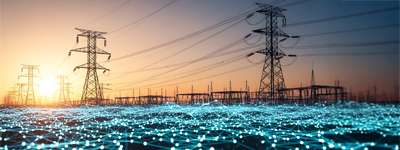 Traditional control systems cannot keep pace with this development. They rely on monolithic architectures, proprietary tools, and manual configuration processes that are slow, error-prone, and difficult to scale. Critical data such as station configurations, SCADA visualizations, EMS parameters, and gateway settings are maintained in isolated silos, leading to inconsistencies and increasing operational risk.
At the same time, regulatory requirements demand full transparency, auditability, and security. Transmission system operators must be able to trace every change, validate it safely, and roll it back instantly if needed. Legacy approaches cannot meet these expectations reliably, making a new, future-ready foundation essential.
Use Case
The Grid Control Foundation provides a unified engineering environment for designing, configuring, and operating grid control systems based on a consistent data model.
Engineers use the platform to model substations, lines, and assets based on standardized structures instead of managing fragmented configuration files. A single system combines real-time operational data from field devices with grid topology and master data, creating a consistent and integrated data foundation.
Visual editors and automated data pipelines simplify the process of building and maintaining network models. This allows teams to manage complexity more efficiently, ensure consistency across systems, and prepare new assets for operation in significantly less time.
Benefit
The solution establishes a sovereign digital foundation for modern grid operations. It enables transmission system operators to design systems once, configure them securely, and replicate them reliably without introducing errors.
By using a model-driven approach and open standards such as CIM and CGMES, GCF ensures that all data remains consistent, transparent, and reusable. Changes to the system become traceable and low-risk, while new requirements can be integrated without compromising system integrity.
The platform significantly reduces the time required to onboard new assets. What previously took weeks can now be completed in hours using template-based modeling. At the same time, built-in validation mechanisms ensure high data quality and prevent errors before they affect live operations.
GCF also eliminates dependency on proprietary vendor tools. This gives operators full control over their data and systems, enabling long-term flexibility and true digital sovereignty.
The Technology Behind It
GCF combines a unified engineering platform with real-time data acquisition to create a fully integrated solution.
The engineering platform includes visual editors, a template-based master data system, and a CIM-compliant topology model. It is tightly connected to a real-time layer consisting of an OT/IT gateway, a high-performance processing engine, and a historian for long-term data storage.
Key capabilities include template-based asset modeling, a unified graph-based data model, and seamless integration with SCADA and EMS systems. The architecture follows a modular, API-first, and cloud-native design to ensure scalability, resilience, and performance at critical infrastructure level.
How It Works
GCF connects field data, system models, and operational applications into a single, consistent workflow.
Real-time data from field devices is collected through the gateway and processed with minimal latency. At the same time, engineers model the grid structure using standardized templates and visual tools within a unified data environment.
All changes are validated in a safe staging environment before deployment. Once approved, updates are automatically propagated across the system, ensuring that models, visualizations, calculations, and data flows remain fully synchronized.
This approach creates a single source of truth across the entire system landscape. It allows operators to manage increasing complexity with confidence, continuously evolve their systems, and maintain full control over grid operations in a secure and scalable way.