
Elia Study – High share of renewables and summer without nuclear – The effects on stability; Oscillations, Voltage and Dynamic Stability
The Elia Group carried out a dedicated assessment of the stability of the Belgian power system.
Belgium, with its growing penetration of renewables (34%), is facing an unprecedented period of three consecutive summers without nuclear power as from 2026, because the two nuclear units Doel 4 and Tihange 3 get refurbished to prepare them for running until 2035. This may lead to reduced system strength.
This unprecedent situation requires a detailed study.
The study deep dives into:
- Adequacy: Does the system have enough electricity to meet demand?
- Flexibility: Can the system handle rapid ups and downs in production and consumption?
- Grid Stability: Is the grid robust enough to face unexpected electrical shocks or phenomena?
The study is tailored in 3 streams: Oscillations, Voltage and Dynamic Stability.
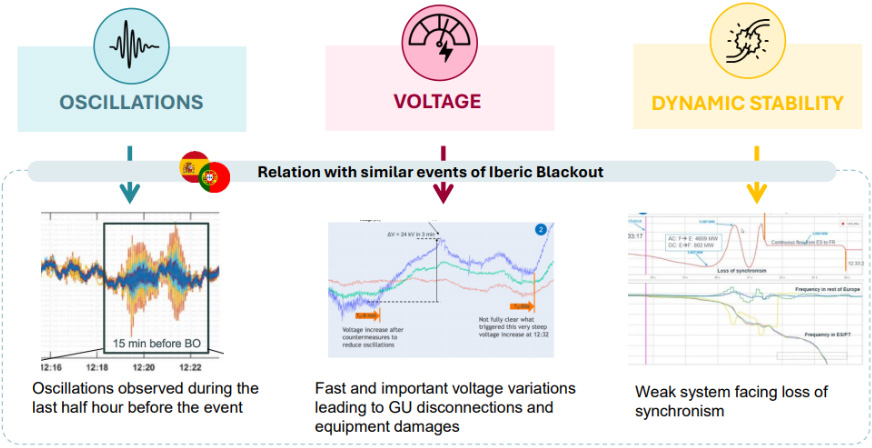
Elia conducts daily system security assessments. In addition, dedicated analyses are carried out in specific cases such as this one. The study will last 3 years, corresponding to the duration of summers without infeed from nuclear power plants. The study will last three years, but the findings and recommendations focus on summer 2026:
- Thanks to its strong interconnections with neighboring countries – especially France – the absence of nuclear power does not pose a risk to grid stability.
- Despite the temporary increase in voltage pressure, the National Control Center (NCC) implemented appropriate measures to remain within operational limits and retain the option to start up additional units as a backup if needed.
- Although stability margins are decreasing, the Belgian energy mix and robust interconnections enable the grid to face unexpected shocks.
- The overall reduction of stability margins will require close operational attention at the NCC in collaboration with neighboring TSO and grid users.


No results found